
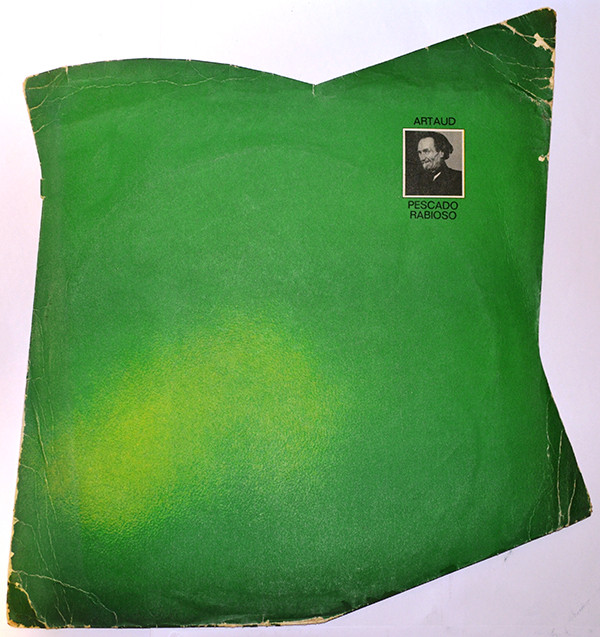
The album “Artaud” released under the band name Pescado Rabioso is often considered the greatest rock album to ever come from Argentina but it wasn’t actually recorded by the band known as Pescado Rabioso. This is my second video about the bands of Luis Alberto Spinetta but you don’t need to watch the Almendra video to enjoy this one, so join me now for the full story of this fascinating band.
After a bad breakup and being forced to complete a 3 album contract without the contracted band, Almendra. Guitarist, singer-songwriter, Luis Alberto Spinetta wanted to detach himself from the guidelines and limitations of the music industry and went on a seven month trip to Europe, Brazil and the U.S.
While away, he’d thought up the name Pescado Rabioso for a new band. Literally meaning Rabid Fish, the name was a way of symbolizing the rage that the Argentine people were feeling under the ruling dictatorship while also being a paradox for the fish as Rabies causes a fear of water.
Luis desired to make a more violent and rebellious band, stepping away from many of his tender Argentine roots and embracing hard rock and heavier blues riffs.
Upon returning to Argentina in late 1971, he joined up with drummer Black Amaya and Bassist and guitarist Osvaldo “Bocón” Frascino. Spinetta had previously performed on a song with Black Amaya that Spinetta contributed to the first album by Billy Bond y La Pesada Del Rock and Roll along with Pappo. Osvaldo “Bocón” Frascino had previously played bass in a band called Engranaje with Pappo on guitar. In later years, Bocon reformed the band with himself on guitar and Black Amaya joined for second formation of that band.
Almendra’s song, “Muchacha (Ojos de Papel)” had become a hit and big audiences attended the few early concerts that the group played and an album by this new group was already something in demand.
They began recording their first album in July of 1972 and eventually keyboardist Carlos Cutaia joined the sessions to add hammond organ to the final track and was soon considered an official member.
The album, “Desatormentándonos” was released in September of 1972 with abstract artwork created by Spinetta’s brother, Gustavo. The title means “Untormenting Us” and I don’t 100% understand Spinetta’s poetic words in Spanish but I believe for the most part he was trying to express something about rising above mediocrity through embracing your own creativity. During this time of revolution, it was from a mindset of liberation that he referred to as being very punk.
The music on this record is a mix of psychedelia, blues and hard rock with some progressive tendencies especially when it comes to the two nine minute tracks. I’m not going to go into major detail of this album’s content or the lyrics, but I find it interesting that the first track, “Blues de Cris” can sort of be seen as a sequel to Almendra’s hit song, “Muchacha (Ojos de Papel)” as this time around Spinetta is no longer looking lovingly into his girlfriend’s eyes but is expressing how he is tired of fighting with her and in the end, he will forget her eyes. The songs here are mostly written by Luis with a bit of input from his friends on a couple of the songs.
I absolutely love The Beatles and I have to mention that there are two notes by Spinetta that end with “P.S. I Love you, Beatles”
After completing the album, Osvaldo “Bocón” Frascino left the band to pursue playing the guitar so the band went back to being a trio with Carlos Cutaia providing the bass with the organ. In November, they went back into the studio to begin work on the next album.
At this time, the guitarist from Almendra, Edelmiro Molinari’s band Color Humano had released their first album and were doing well for themselves. But their drummer, the incredibly talented multi-instrumetalist and songwriter David Lebón, jumped at the chance to join up with Spinetta, left Color Humano and filled the bassist role in Pescado Rabioso, eventually living with and becoming very good friends with Luis Alberto Spinetta. Lebon had also previously played with Black Amaya in Pappo’s Blues
The band released a couple of singles that would provide three bonus tracks to later reissues of the “Desatormentándonos” album. The first single, “Post-Crucifixion” with “Despiertate Nena” were also the songs that the band performed for the 1973 film “Hasta Que Se Ponga el Sol” which showcased the Rock Nacional movement.
The next single’s B-Side track appears on the second Pescado Rabioso album but the first side was a beloved song that the band had first premiered at their second concert, “Me Gusta Ese Tajo.” The song was later censored by the dictatorship that ran the country from 1976 to 1983. Personally, I actually think that this is one of their most boring songs musically as it is basically just a standard 12 bar blues number. But the lyrics do make me giggle. There are only a few words to the song and basically he says that he likes the vagina that he met yesterday and that her pretty legs make him want to destroy the crap out of the city. This track was written by the original trio and the recording features Osvaldo Bocon Frascino on guitar with no help from David Lebon so it was likely recorded before Bocon left the band.
Their second LP was released at the beginning of 1973. Sometimes when researching these videos I go crazy trying to find a tiny detail of information and one place on the internet suggested this album was released January 1st, another said January 13th and another website said that they finished recording the album at the end of January. I also think this album was likely released before the singles that I mentioned a minute ago but I wanted to group them closer to the first album since they appear as bonus tracks on the later releases. So if you have some solid info on these release dates please comment below, and if you appreciate all the work I go through to try to provide accurate information on these obscure topics, please remember to give this video a “Like” and subscribe for more! Thank you very much!
It is a double album that is intended to be listened to as a whole. The first disc is referred to as “Pescado” while the second is labeled as “Dos” and the intro track of the second disc is a call-back to the last song on the first disc as a way of informing you that the music is continuing. The album came with a booklet handwritten and drawn by Luis that includes tons of information about each song as well as what equipment the band used. The album is mostly in a heavy psychedelic vibe but it stays varied enough to justify how long the album is with great emotional expression from Luis Alberto Spinetta’s voice and the rest of the band throughout. There are less blues aspects than the previous LP and they incorporate some softer moments with acoustic guitars, piano and even harp on one of the songs.
There are folky aspects and some interesting moments of psychedelia as well as a lot of progressive rock elements and 4 of the songs reach run times of over 7 and a half minutes. I think some of the favorites here are the blues rocker that likely stole a little from Zeppelin but is still great in it’s own right, “Como el Viento Voy a Ver,” The more traditional rock n’ Roll song, “Nena Boba,” the folky and psychedelic songs, “Credulidad” and “Mi Espiritu se fue” and the grand finale, the long and epic progressive song, “Aguas Claros de Olimpos” which was originally titled “Cristalida”
The band shares some writing credits on some of the songs, while David Lebon and Black Amaya each provided a song. But the rest is written by Spinetta with his influence from surreal French poetry and his subjects go deep and were very meaningful to him. Someone could make a video much longer than this one just diving into all of the lyrical themes and their meanings, and I’m not gonna do that, sorry.
My focus is to bring light to unique musicians that deserve more recognition around the world. I’m aware that I could make more money on YouTube by talking about subjects that are more popular but that would defeat the purpose of my channel. If you appreciate all that I’m doing here, please be sure to “Like” this video, subscribe to my channel and consider buying some of my new merch or donating to my bandcamp page because this is my only job right now and it only makes me about a dollar per day. Thank you very much, ramble over.
Pescado Rabioso had been intended as a band that would worked on equal grounds but it was clear that the band was still being driven by Spinetta’s constantly changing artistic style so after recording this album, each member started to walk away from Luis until the band broke up as the other guys weren’t as satisfied with where the music was going and wanted to return to more of a blues rock sound.
For Spinetta’s next album, he maintained the name Pescado Rabioso because he didn’t want to be idolized as a solo artist, but also he wanted to show his previous bandmates that he was Pescado Rabioso and the name could continue without them. A self-described selfish part of his life, the album’s complex themes combine feelings about the cultural revolutions in Argentina, his new relationship with Patricia Salazar and his response to the French writer and poet, Antonin Artaud.
Artaud’s writings were bleak and left the reader depressed but Spinetta believed in John Lennon’s message of love and wanted to portray that healing the soul was the way out of all the horrors of the world. One of Antonin Artaud’s works was about the end of Van Gogh’s life and how his brother and psychiatrist played their part in the great artist’s downfall. When Spinetta debuted the music as a solo act for his album titled “Artaud,” everyone in the audience received a manifesto by Luis that was an allusion to these writings but about how he felt about rock music. Expressing how he felt about “professional” rock music doing what is expected and largely being about drugs and sex rather than true expression.
Although the record label fought him on it, when his album, “Artaud” was released in October of ‘73, it came in an oddly shaped package rather than the normal boring square. The front cover has a picture of Antonin Artaud as an old man while the back contains an image of him when he was younger. Inside the packaging was a quote by Artaud that reads something like, “Aren’t green and yellow the opposite colors of death? Green for resurrection and yellow for decay?”
I feel like I’m going to struggle not to go into heavy detail about every song here. They’re all very different and all have really interesting things about them but I’m going to try to keep this brief.
The music is on this album is mostly very complex and passionate. Luis recorded 5 of the 9 songs without any other musicians. Sometimes basically just alone with an acoustic guitar or piano, but he also overdubbed another layer of vocals, electric guitar and light percussion on some of his solo tracks. For the 4 full band songs, he requested the help of his former bandmates from Almendra and/or his brother. Emilio del Gercio plays bass on all four of these tracks while Almendra’s drummer, Rodolfo Garcia plays on two of the songs. The other 2 songs feature Luis’s brother, Gustavo on drums.
One of the highlights is the 9 minute track, “Cantata de Puentos Amarillos,” a progressive suite performed by solo Luis that references Artaud’s writings while making direct references to letters written by Van Gogh as well as his artwork. Following that is the heavier full band progressive rock song, “Bajan” which some claim is Spinetta’s best song. It was famously covered by Gustavo Cerati, another popular musician from Argentina, and I myself have been playing the song for several years now and it is the most complex song that my pitiful skills can play on the guitar.
I feel like mentioning other highlights, but again all the songs are so awesome, that I seriously want to just talk about all of them. If I had to choose a least favorite song, it would be the slow jazzy blues song, “Cementerio Club,” personally, I think it is a little too long while not being as musically interesting as the rest of the album. But it is still great and I’m likely in the minority of people who feel that way. Gustavo Cerati claimed the guitar solo as the best solo in history and the lyrics apparently represent many themes that went over my head as I did not live through these times in Argentina and am not entirely fluent in spanish. A quote online says “Cementerio Club” has been interpreted as a metaphor for the violence of the 1970s, as well as an expression of Spinetta’s own thinking about the self, God and the rejection of the process of idolatry of popular musicians.“
Man, I spent so long talking about that song, it’s unfair that I didn’t mention “Supercheria,” or “Todas Las Hojas Son Del Viento” or “Las Habladurias del Mundo” but if I’m gonna talk about them, I’m gonna have to talk about “Por,” “La Sed Verdarera” and obviously I’d have to talk about the psychedelia in “A Starosta, La Idiota!” I love this freaking album.
“Artaud” was an important change to the Rock Nacional movement and has since been regarded by many people as the best rock album to ever come from Argentina.
Even during his time with Pescado Rabioso, Black Amaya had continued to work with Pappo’s Blues and Billy Bond y la Pesada, and he and David Lebon recorded on the 4th Pappo’s Blues album after leaving Pescado Rabioso. Around the time “Artaud” was released, David Lebon released his first of several solo albums. He recorded with many people over the years including playing with Charly Garcia’s band, Seru Giran and Carlos Cutaia would later join up with Charly Garcia for his band La Maquina de Hacer Pajaros before releasing many solo albums of his own as well. I already have videos about Charly Garcia’s bands which you should check out and hopefully sooner than later I will make the follow up to this video which will go into details about Spinetta’s next band, Invisible so be sure to subscribe and check out my video on Almendra if you haven’t already.
All five members of Pescado Rabioso played together again in 2009 for the best ever concert in Argentina, Luis Alberto Spinetta’s tribute to his career, Spinetta y Las Bandas Eternas. They were joined Guillermo Vadalá on bass so that both Osvaldo “Bocon” Frascino and David Lebon could play guitar.
I highly appreciate you watching this video, please remember tell me what you thought down below in the comments, “Like” this video so that YouTube shows it to other people and consider subscribing to learn what happened next with Luis Alberto Spinetta. Thank you again very much and have a happy listening session!


 Sean's Music Hunt
Leave a comment