
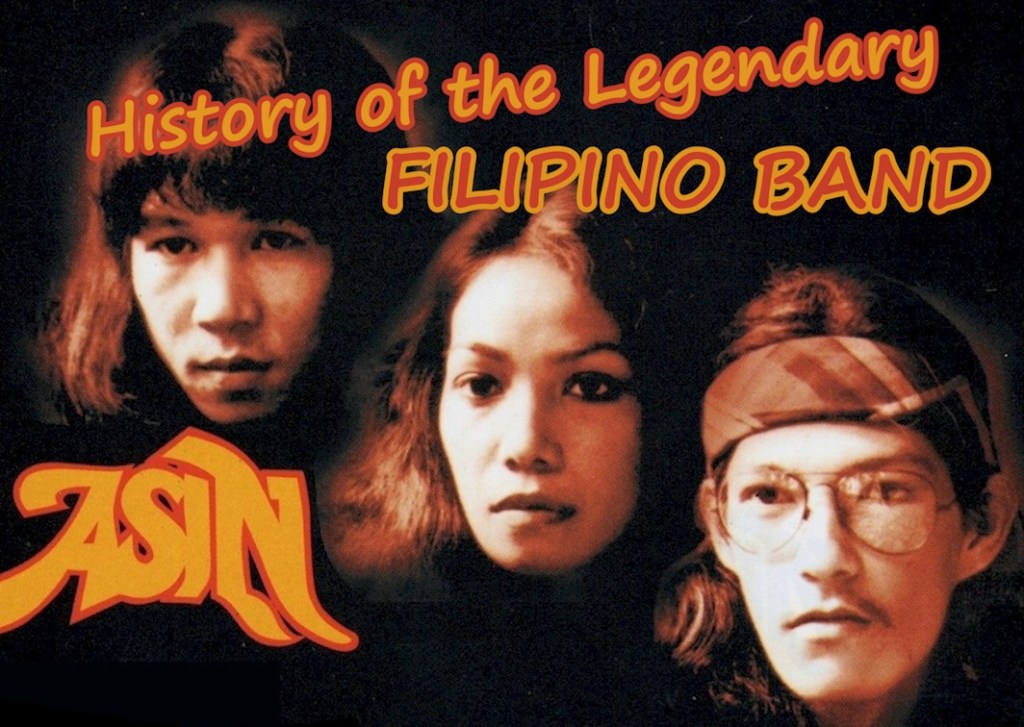
History of the incredibly inspirational ASIN from the Philippines.
Shello, my name is Sean and today I’m talking about a legendary Filipino folk rock group that is still heard all around the Philippines to this day due to their hopeful lyrics that encourage us to leave a better world for our children and their inclusion of traditional Filipino instruments. A lot of the information in this video comes directly from the founder of the band, Noy Pillora so join me to learn about the fascinating band, Asin!
The first formation of Asin goes back to the end of 1976 when Mike “Nonoy” Pillora Jr. met Cesar “Saro” Banares Jr. at Brick Chimney Folkhouse near the schools they attended. Cesar was in his 2nd year as an architecture student at University of Santo Tomas and Mike was in his last year of High School at the University of Manila. The two bonded over their drinks and aspirations to become folk singers and soon started performing at folk clubs and bars together under the name, Mike and Cesar.
(They would loop the same 11 songs for 50 pesos per night which they would split between the two of them.)
(Saro – August 17,1955)
(Mike – May 24 1954)
(Both spoke Ilonggo as Mike grew up in Bacolod on Negros and Saro was from Koronadal, South Cotabato)
They would perform covers of songs by groups like America and Simon and Garfunkel but after a year they felt the need for a third member to fill the missing middle voice so they tried out some of their friends but nothing clicked. Soon enough they met a woman named Lolita “Nene” Carbon and she and Saro fell in love.
Lolita had grown up in a house in Manila that was filled with instruments and her father had many friends that were musicians. So she started playing music at a very young age and at just 10 years old she won a live radio talent show
(singing “The Impossible Dream,” which later became the signature song of Ninoy Aquino)
at 13 she joined the Philippine Navy Band and as she aged she continued to play with different groups and proved she was an excellent singer.
As Lolita and Cesar began spending all of their time together, it became clear that she should be tried out as the third member of the group. They began singing songs by Peter, Paul and Mary and Noy had the band name “Salt of the Earth” in his head due to it’s biblical meanings but it also appealed to the group because of the Rolling Stones lyric “Let’s Drink to the Salt of the Earth”
(Though I think the band was more familiar with the Joan Baez version
In 1978, the group would begin their career as recording artists after Tony Ocampo of Vicor Records saw them perform. They switched their name to the Tagalog form, Asin Ng Lupa but the label thought the name was too long and they became simply, ASIN.
(Like many musicians, they were given a “standard Contract” that they were excited to sign not knowing how poorly they would be paid or that the company would own the rights to their songs)
(Referenced in Ang Tanong by Noy 1984)
They also met Fred “Pendong” Aban Jr. around this time, and as Saro would often be busy with Lolita, Noy and him became friends. Pendong had been in a group called Keith and Fred which was starting to fizzle out while he longed to join Asin. He had the opportunity to contribute bass as a session musician during the group’s recording sessions.
(Born Buenavista, Agusan del Norte, Moved to Manila to attend Maritime academy with aspirations to be a seaman)
At this time, it was typical for Filipino musicians to remake popular songs in English into their native language but Saro had been inspired by brown bath water to write a song about saving the environment in Tagalog. The record label was impressed and this track would be the first to be recorded and released as a single with another song written by Saro as the B-Side. (“Sayang Ka” has a lyric the encouraged artists to create and not imitate, Noy felt the insult was directed at himself and began to write “Tuldok”) The single quickly made its way to jukeboxes and radio stations all around the country and was followed up by another single featuring songs by Lolita and Noy.
The album, “Masdan Mo Ang Kapaligiran” (Look at the Environment) was released in late 1978 and explored social and political themes with a positive outlook on how we can strive for a better future. These types of themes will continue throughout their albums. (Though they did not consider themselves to be a political band) This would also be the time that western influenced folk rock would be mixed with traditional Filipino instruments. Saro played the majority, if not all, of the Filipino instruments, the band with Pendong laid down the groundwork and the record label provided instruments like violins over certain songs. The band often sings harmonies in different combinations or would take turns singing lead vocal sections.
All of the songs were written by all three members, aside from “Anak” by Freddie Aguilar which the label insisted that they include. (Freddie Aguilar was a folk singer signed to the same label who had began releasing his own songs in Tagalog shortly before Asin was discovered.)
Lolita also sang a version of “Anak” in Japanese and pictures of her alone were used on the cover of the Japanese release, as if the record labels were trying to make her into a solo artist. Noy had not been consulted about this beforehand and already felt trust waning between the band members. While Saro and Lolita went to Japan for 2 weeks to promote the release of the Japanese version of the album, Noy and Pendong went to Baguio and composed songs together.
The people were were inspired by the lyrics and at this time in the Philippines, you couldn’t go outside of your house for more than a couple of hours without hearing ASIN, they were playing everywhere, from Jeepnys and taxis to Restaurants and grocery stores. The trio quickly rose to being the most famous Filipino group in the country.
In late 1979, Asin released their second album, “Himig ng Pag-Ibig,” it is largely a stylistic continuation of the first album and featured the song “Himig ng Pag-Ibig” which one website claimed to be “The favorite Pinoy love song of all time.” Another highlight from this album includes “Balita” which continues to call out the oppression and sadness that the country was facing under the dictatorship of the Marcos Regime. The album ends with a fantastic track that reflects traditional Filipino folk music, with chanting vocals and using only indigenous instruments.
While the first album was primarily written by Saro, with Lolita contributing 1 song and Noy contributing 2, this album has two songs by Lolita, three by Saro, and the rest were written by Noy and Pendong.
While feeling despaired that they were stuck with a company that barely paid them, they released their second album for Vicor Records in order to fulfill their contractual agreement. Soon after, Saro and Lolita broke up and the band parted ways without much of a goodbye. The magic had already been replaced by rifts and distrust.
—-
I would really appreciate it if you could take a quick two seconds to “Like” this video, I’ve spent hundreds of hours on it, spent money to travel and attempted to read an entire book using a translator app. All I’m asking in return is that you “Like” this video and consider subscribing to learn about more bands and to see my interview with Noy, Thank you very much!
—-
Saro went home to Cotabato, Noy and Pendong temporarily made a new group called Tuldok before Noy went back to Bacolod to study engineering, and Lolita had disappeared before reemerging with a new group called “Lolita and the Boys” which released the first Filipino reggae song called “Usok” in 1981. The members all fiddled around with different bands for a time including a new reggae inspired band with Lolita called Sulabama.
In the years that ASIN had mysteriously disappeared, the people of the Philippines were inspired by the hopeful messages that the band had left them with but rumors also went around that the dictatorship had been the ones to put a stop to the band’s lyrics as they opposed the government’s tyranical rule.
In 1983, a group of business students on the island of Cebu formed a project to reunite the band, Noy was the first contacted, he agreed and helped to seek out and convince the other members including their bassist, Pendong. This resulted in a sold-out show at Cebu Coliseum and their previous record label immediately contacted them to renew their contract. The group instead hired Noy’s older brother, Dindo, to manage the group so that they wouldn’t get too stoned and sign into a horrible contract ever again.
Dindo was enthusiastic about his role and hired a full crew with a drummer and stage and light specialists to aid the band as they played many successful concerts in Mindanao while rehearsing new material when they found the time.
About a year after this new regrouping, Fred “Pendong” Aban Jr. was recruited by Noy to finally become an official member of the band and they released their album, “Himig ng Lahi”
(Since everyone else was Jr, Lolita decided to become one herself on album credits)
This album still sounds very much like classic folky and somewhat psychedelic Asin, but has a bit more variety with some harder rocking pieces and even some country inspiration on one of the tracks. As a lover of Progressive rock, my personal favorite song is “Bantayog,” which has multiple drastic changes and a tempo increasing build up that includes Kulintang.
(Another rocking piece that I really like is “Magulang” which I believe is about rebelling against your parents while still loving them, it was dedicated to Noy’s friend Rocky who had written some of the song’s lyrics but unfortunately died in a car accident. )
As Asin was still very popular and the country had gone several years without hearing them, this album sold rapidly, was certified gold within just a few weeks of release and won awards for the best album of the year in 1984. This is perhaps when ASIN was at the peak of their fame with successful and highly anticipated concerts all over the country.
After this, their new record label, Ivory Records suggested that the group do an album of cover songs. Noy had the idea of gathering traditional songs from all around the country in a way of uniting the different regions and the result was 1984’s “Mga Awiting ng Bayan Kong Pilipinas” (Philippine town Songs)
Not being a native to the Philippines, the only song on this album that I’d heard previously was the children’s nursery rhyme “Bahay Kubo.” This version of the song is a cappella with fantastic vocal harmonies, the use of children’s voices in the middle, makes it the only section of music by Asin that I actually do not enjoy the sound of. Sorry, I don’t like hearing children’s choirs, that’s just me, otherwise, I enjoy this album very much. The majority of the album is a soft folk sound that continues what we expect from Asin along with a few harder rocking pieces again (Rosas Pandan, Hahabol-Habol) and some reggae inspirations like heard in “Waray-Waray” and “Hahabol-Habol.”
After this, Noy had the idea of traveling around the Philippines in order to learn more about traditional music and instruments from different tribes, and though there is a large amount of indigenous instruments used on the album, from my understanding the other members were reluctant to actually incorporate all that he had learned into their next album.
But the album begins with the sound of a Faglong along with Filipino percussion instruments before vocals and acoustic guitar come to the forefront. Filipino folk elements come and go throughout this album, but a lot of it still consists of acoustic guitars and occasionally moments with electric guitar solos. The album was created shortly before the country had a revolution and the lyrics reflect this time period.
—-
Forgive me for not understanding all of the lyrics or their context, Nakaentendi akong ng conting Tagalog lang. This video was tons of work for me and if you appreciate me taking the time to create it, please just “Like” this video. Thank you!
—-
The name of Asin’s 5th album, “ASIN…Sa Atubiling Panahon” or “ASIN… in a reluctant time” was inspired the desire for change that was in the air and the occurrence of the dictator’s spontaneous election that he would rig in order to continue his reign. While campaigning, the country’s leader, Marcos actually attempted to hire ASIN to perform in support of him in order to bring in the huge crowds that the band was capable of attracting. The band was basically told to name their price and that everything would be provided for them, the band of course was not going to betray their principles and refused. When Marcos won his rigged election, millions of people in Metro Manila took part in the EDSA revolution in February of 1986, the freedom fighters that gathered sang hopeful songs together, which obviously included many songs by ASIN.
Their newly released album went unnoticed because of everything else going on in the country and is extremely hard to find today, the only versions found online are low quality, which is a shame because this may be one of the band’s greatest albums. With spirits low in an uncertain time, the members had all kinds of fights with each other, including an actual fight on stage. (between Pendong and Saro that made it into the newspapers, though the following night the group performed as if nothing had happened.)
Asin split up again until things were starting to normalize and in early 1988 they decided to give it another go. This time however, Noy approached one of their previous producers, Ed Formoso with the idea to write new songs and invite other famous but inactive Filipino singers to take part in. Once the other members of Asin agreed to regroup and were convinced of an ever more successful future with Ed Formoso taking the role as manager, Ed Formoso seemed to “forget” about Noy’s ideas and allowed greed for another quick buck to take over. In 1988, they released two more albums of cover songs, “Himig Kayumanggi” and it’s continuation, “Sinta.” Since these albums didn’t come from the heart, they didn’t leave a great impression.
From my potentially biased understanding, Noy was the member that truly maintained his values and wasn’t interested in simply using the name ASIN to make money, and at least from his perspective, this is the reason for his expulsion from the band potentially in combination with their producer Ed Formoso wanting to take Noy’s idea and expand on it how he saw fit. Once Noy was out of the picture, Ed Formoso created an all star band called Lokal Brown. They released two albums and featured the other three members of ASIN, along with Chicoy Pura of the Jerks and some others including Formoso himself who composed at least the majority of the songs.
Noy was off exploring the world when the rest of Asin split up again in 1990, Pendong would create a group with his wife called Ang Grupong Pendong, Lolita joined with session musicians to create a group called “Nene” and released an album in 1991. Saro would return to his home town of Koronadal. The original 3 members of Asin regrouped for one final concert in 1992 and once back together, Saro proposed to Noy that the two of them could continue Asin without Lolita or Pendong and informed Noy that he had not been informed that Formoso would fire Noy and that afterwards, Pendong became the group’s leader. The two did not continue Asin and unfortunately one year later, on March 18th of 1993, Cesar “Saro” Banares Jr. was involved in big fight at a karaoke bar and was killed by a shot to the head at the age of 38…
Ed Formoso produced a tribute album to Saro featuring a variety of different Filipino rock bands entitled “Saro Sa Bato” The first track however is the highlight, as it is actually a recording of an unreleased song by Saro that had been discovered on his computer after his death. Thank you for all your wonderful songs and positive messages, Saro, you will never be forgotten.
In the year 2000, a man from the UK attempted to once again reunite ASIN. The three remaining members regrouped on the beautiful island of Boracay where Noy had been living with his wife Ginji. Noy proposed that the group record two albums to be released on the same day, one would collect 4 songs from Nene’s solo album, 4 songs by Ang Grupong Pendong and 4 songs that Noy had written with his wife, while the second album would be fresh songs written together as a group. Money signs flashed in the eyes of his old friends but Noy had become a successful business owner on Boracay and wanted to release the albums without the help of a record label. The other two disagreed with that idea and when it was clear that they no longer saw eye to eye, Noy allowed the others to use the name Asin but decided not to take part.
The final album under the name Asin was released in 2001, “Pag-ibig, Pagbabago, Pagpapatuloy…” Though the album mostly consists of songs written by Lolita and Pendong, it begins with an award winning orchestral medley of many classic Asin songs and ends with a new recording of the song that had been found on Saro’s computer, “Sa Malayong Silangan.”
Lolita and Pendong performed together for several years before breaking up in 2006, the same year that Noy and Ginji would self-publish an album under the name Nonoyginji Interaktiv. The content of the album finally sees Noy releasing music that is purely inspired by The Philippines without using Western influences.
Today, Lolita lives in Manila and occasionally plays concerts with a backing band under the name Lolita Carbon with Asin Band. After time spending several years in Israel and some adventures to the U.S. where he teaches Filipino children to play some of his old songs, Noy currently lives in his home town of Bacolod where I was able to interview him and see him perform his classic songs with his band Padayon. He hopes that someday this new group will compose and release new songs together.
To learn more, be sure to hit the subscribe button as I will be releasing a video of my interview with Noy in just a few days. And to get even more in-depth on the subject, you have to contact Noy himself to purchase a copy of his book. Thank you so much for watching, be sure to like and subscribe and have a happy listening session!
 Sean's Music Hunt
Leave a comment