
https://youtu.be/k3IYHtM_-oQ — Today we’re talking about the Argentine super group that has often been referred to as the South American Beatles due to their importance and how they are remembered today. The music however is a unique blend of progressive jazz-rock with pop rock aspects and inspiration from their local culture, especially tango. Join me to learn about the history and discography of Seru Giran!
Serú Girán was a supergroup originally from 1978-1982 that consisted of Charly Garcia from Sui Generis and La Máquina de Hacer Pájaros, Oscar Moro from Color Humano and Los Gatos, Pedro Aznar from Alas and later with the Pat Matheny Group, and of course David Lebón who had already released a solo album as well as played with Pappo’s Blues, Billy Bond, Polifemo, and Pescado Rabioso with Luis Alberto Spinetta.
Child prodigy, pianist, singer, and songwriter Charly Garcia had become an important figure in Argentine Rock in his folk duo, Sui Generis with his friend Nito Mestre and had fled Buenos Aires to Brazil after the demise of his progressive rock band La Maquina de Hacer Pajaros at the end of 1977. He was joined by David Lebon, who had been a member of many successful groups in Argentina during the 1970’s. Including Pappo’s Blues, Billy Bond y La Pasada del Rock and Roll, Color Humano, and Pescado Rabioso with Luis Alberto Spinetta. He had also released a solo album in 1973 which featured some of his previous collaborators as well as Charly Garcia. He had recorded two albums in a progressive rock trio called Poilfemo with Rinaldo Rafanelli and Juan Ridriguez, the rhythm section Charly Garcia had used for the final Sui Generis album, in order to bring the band closer to progressive rock.
Charly wanted to form a new band and made a visit back home where he saw 18 or 19? year old, Pedro Aznar performing at a concert in a group called Pastoral. An incredible bassist largely inspired by Jaco Pastorious, Pedro Aznar had also been in the band Alas as well as Raul Porchetto’s band before accepting the offer to play with Charly Garcia. Oscar Moro was was also recruited for the band. Oscar had been in Charly’s previous band, La Maquina de Hacer Pajaros, he was also already famous for performing Argentina’s premier 60’s act, Los Gatos as well as taking David Lebon’s place as drummer of Color Humano
March and april
Everyone including Billy Bond would gather in Sao Paulo where they recorded most of the first Seru Giran album. A 24 piece orchestra would later be recorded in Los Angeles mainly for the tracks Eiti-Leda and Seru Giran. Tracks that were recorded in Sao Paulo but not used on the final product, were later overdubbed by Billy Bond and released in 1979 under the name Billy Bond and the Jets.
In July they moved back to Buenos Aires and made their initial debut performing on a boat on the Riachuelo river as well as a festival in Luna Park in which the sound was said to be terrible. Their true grand debut to a massive audience was November 3rd at the Obras Sanitarias Stadium where things didn’t turn out as expected. The band performed a disco spoof that would later be released on the Billy Bond and the Jets album, but the crowd didn’t understand the satirical nature of the song and the audience threw things and demanded that they play one of Charly’s classics instead. After this there were many bad reviews and the band was criticized by the media.
The debut self-titled album by Seru Giran was released in November of 1978 and due to the negative publicity surrounding the band, it didn’t favor well at the time but has since become very beloved amongst fans of Charly Garcia. This album has a great range with a lot of it being very piano, moog or synthesizer driven. We start with a 7 minute progressive track that Charly had previously performed a version of with Sui Generis. Eiti-Leda introduces us to many of the sounds we’ll be hearing on the album. Starting with gentle piano, orchestration and the beautiful voice of Charly Garcia, the band soon picks things up with progressive rock, jazz and funk elements. The composition goes on to have awesome bass, guitar, and keyboard solos, emote tons of emotion, and have an epic climax or two alongside the orchestration.
The rest of the album will hear the band focusing more on some of these types of styles they have addressed. Though Garcia wrote the majority of the album, David Lebon wrote or co-wrote 3 of the songs and sings lead vocals on one more of the songs than Charly does. David sings what is likely the band’s most famous song, Seminare.
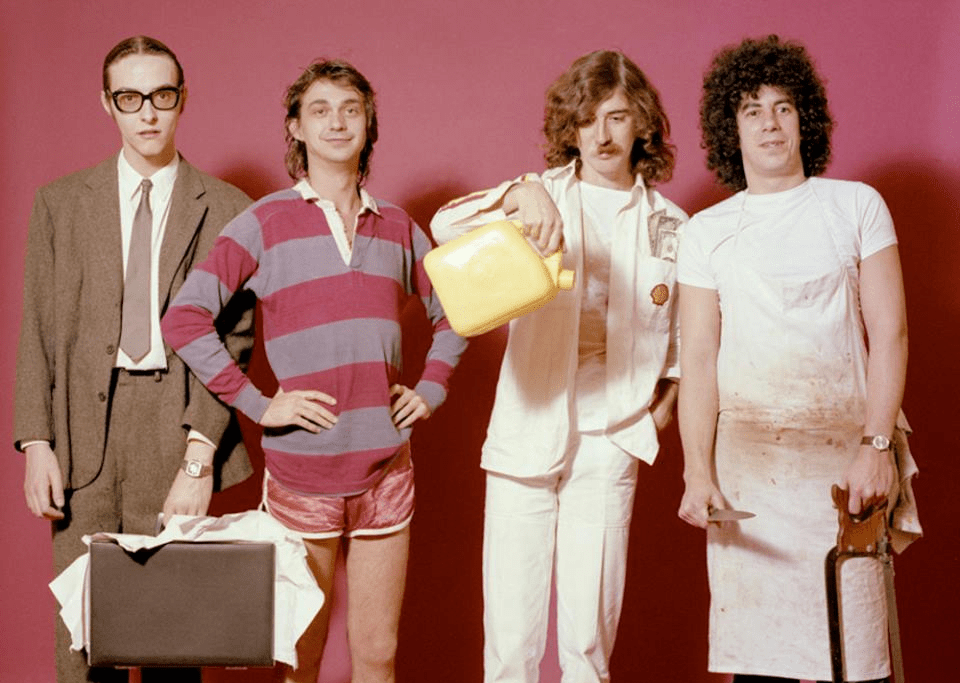
Despite the criticisms the band received, they believed in their project and carried on head strong. Their next album, “La Grasa de Las Capitales” produced by Charly Garcia and released in August of 1979 was a much more obvious stab at the establishment and the media. The album cover was a parody of one of the magazines that had criticized them and made references to some of the more ridiculous articles. One had been called “Charly Garcia, Idol or What?” and another had made mockery of the band by suggesting they had actually been replaced by doubles and didn’t actually perform live at all. For this reason, the band is seen dressed up as different professions on the cover.
This is my favorite album by this band and I can’t get enough of it. The band no longer includes orchestral instruments and is a lot punchier and heavier with songs that get straight to the point and continue to keep you hooked with lots of great changes and dancier rhythms, but the album still features many progressive arrangements as well as softer piano and lyric driven segments and an acoustic guitar balad. The gentle and incredibly passionate song about suicide, Viernes 3 AM, was banned from radio by the Argentine government, but in today’s world, every time I finish listening to a Spinetta album, Spotify assumes I want to hear it.
Once again the writing and singing is mostly split by Charly and David Lebon, with Charly still being the primary composer. Pedro Aznar recorded his tracks at his own home and recorded every instrument on his song, “Paranoia y Soledad” or Paranoia and Loneliness, which is totally one of a kind and is very melancholic and haunting with these Oohs from Pedro that are kind of like a cry of desperation and it’s pretty awesome.
There is a lot that can be said about this album including the lyrical messages and the uniqueness of the music but of course nothing will demonstrate it better than experiencing the album itself. I can’t recommend this one enough and it wasn’t lost on the people of Argentina either so the perception of Seru Giran quickly switched from negative to extremely positive.
Before partnering with Charly, David Lebon had been writing music for a group called Seleste and a lot of this material was recorded in 1979 with help from Pedro Aznar, Oscar Moro, Rinaldo Rafanelli and Diego Rapoport. Though what we received with this album is really excellent, David had intended for it to be a double album and it had been pushed back for a year due to an accident with his daughter Nayla, who the album is named after.
I spent a ton of time sorting through all this information in Spanish and I’d really appreciate it if you could give me a “Like” down below so that I know it wasn’t for nothing. Thank you very much. Mi espanol no es incredible, asi que era mucho trabajo para estudiar este video y te aprecio si puedes dar me un like, muchas gracias.
Seru Giran also intended for their 1980 album to be a double album with an album side of live material but due to the cost of the project, they cut it down to 8 tracks and saved a few for later use.
Bicycleta was released at the end of 1980 and is thought by many to be the band’s greatest accomplishment. Now that they had the right kind of attention on them, they were able to start this album off with an over 9 minute track that is an instrumental tango for the first half then has a couple minutes of deep lyrics in which we see young people getting drunk and dancing tango together but then we recall that under the dictatorship at the time, the only way to see such a thing was on TV. The album goes on to have another well regarded classic that continues to show how the band used metaphors to get around censorship while still speaking about the harsh reality that they lived in. “Cancion de Alicia en el Pais” purposefully leaving the word “Wonder” out of the title to a song that appears to reference “Alice in Wonderland” but really painted the picture of how if you spoke out against the dictatorship, you were certain to face torture or death. Charly also has some lyrics that were critical of musicians that quickly deserted their true artistic aspirations in favor of jumping on the New Wave wagon, so if you’re an English listener and suddenly you think they’re ripping off “The Sultans of Swing,” keep in mind there is a bit of satire here.
Again, over half of the album is written by Charly, Pedro Aznar wrote the slow jazz fusion instrumental track, and David Lebon wrote a track for his daughter, Nayla, which shows their jazz rock side as well as the more accessible and very catchy song, “Cuanto Tiempo Mas Llevara?”
The public presentation of this album marked the beginning of Seru Giran adding more of a spectacle to their stage appearance and they performed with bicycles, flowers and rabbits on the stage. This followed by them performing the first night at The Monterrey Jazz fest in Rio De Janeiro, but after their incredible performance, they were urged to play the next day at the main event with Weather Report, John Mclauglin, and Brazilian jazz legends, EGberto Gismonti, and Hermeto Pascoal. This is where Pedro Aznar would get to meet his hero, Jaco Pastorious as well as later collaborator, Pat Metheny.
1980 also saw the releases of the first album under the name Charly Garcia. A Double album containing a good amount of the recordings from El Festival Del Amor as well as a studio jam and a new song called “Musica del Alma.”
The band’s fourth studio album, Peperina was release in August of 1981. This album leans a little bit more in a gentler progressive pop direction while still maintaining strong influence from jazz, tango, and progressive rock. The excellent song “Peperina” starts the album with some gentle piano and the beginnings of a story and builds up to an explosive ending that gets you pumped and leaves you satisfied yet wanting more. The song was written about a journalist that would write terrible reviews about the band whenever they played in her city, so Charly wrote about her attempt at a love affair his manager and a fictionalized movie version of the story was released in 1995. They mixed the woman’s name with a bit of a tribute to Sargeant Pepper’s Lonely Heart’s Club band when naming the song and album, Peperina.
The album was initially criticized for not being a huge step up from previous albums but truly every song on it is it’s own experience and I enjoy the album very much. Cinema Verite is likely the most well known song outside of “Peperina,” I’m also a big fan of the political, heavy art rock piece, “Jose Mercado” the epic “Esperando Nacer” as well as the beautiful finale performed entirely by Pedro Aznar, “Lo Que dice la Lluvia,” or What the rain says. I think it’s a super enjoyable album all the way through.
In January of 1982, Pedro Aznar was invited to join the Pat Matheny group, and in the months before Pedro moved to The United States, the band did a final tour and then performed a two night finale which ended with well wishings for Pedro and his new opportunities. These were likely some of the best performances of the band, they played a couple of new songs, and released a live album called “No Llores por mi, Argentina” or don’t cry for me, Argentina.
After almost 10 years of solo albums and side projects, Seru Giran reunited for several concerts and a poppier but still enjoyable studio album, Seru 92’Charly had always wanted a band with songwriting on an equal playing field, and Pedro, David, and Charly equally share songwriting credits on this record, and Oscar Moro is credited for helping write 2 of the songs. Overall this is more of a gentle pop album that I only recommend to huge fans of the band that have already listened to everything else.
It seems the band bowed a farewell after a show in Buenos Aires and that was the end of that. There were a few small reunions between some of the members over the years including 2 albums released by Charly Garcia and Pedro Aznar. These two also got together in 2007 to celebrate the life of Oscar Moro, who we lost in 2006 though we will of course continue to appreciate and listen to his work. Thanks, Oscar.
I release videos like this on a weekly basis about bands from all over the world. I will start talking about Spinetta and other bands from Argentina soon so please be sure to subscribe so you don’t miss anything. I’d really appreciate a “like” as well as a comment down below. Tell me what band you’d like me to make a documentary in this style for and have a happy listening session.
 Sean's Music Hunt
Leave a comment