
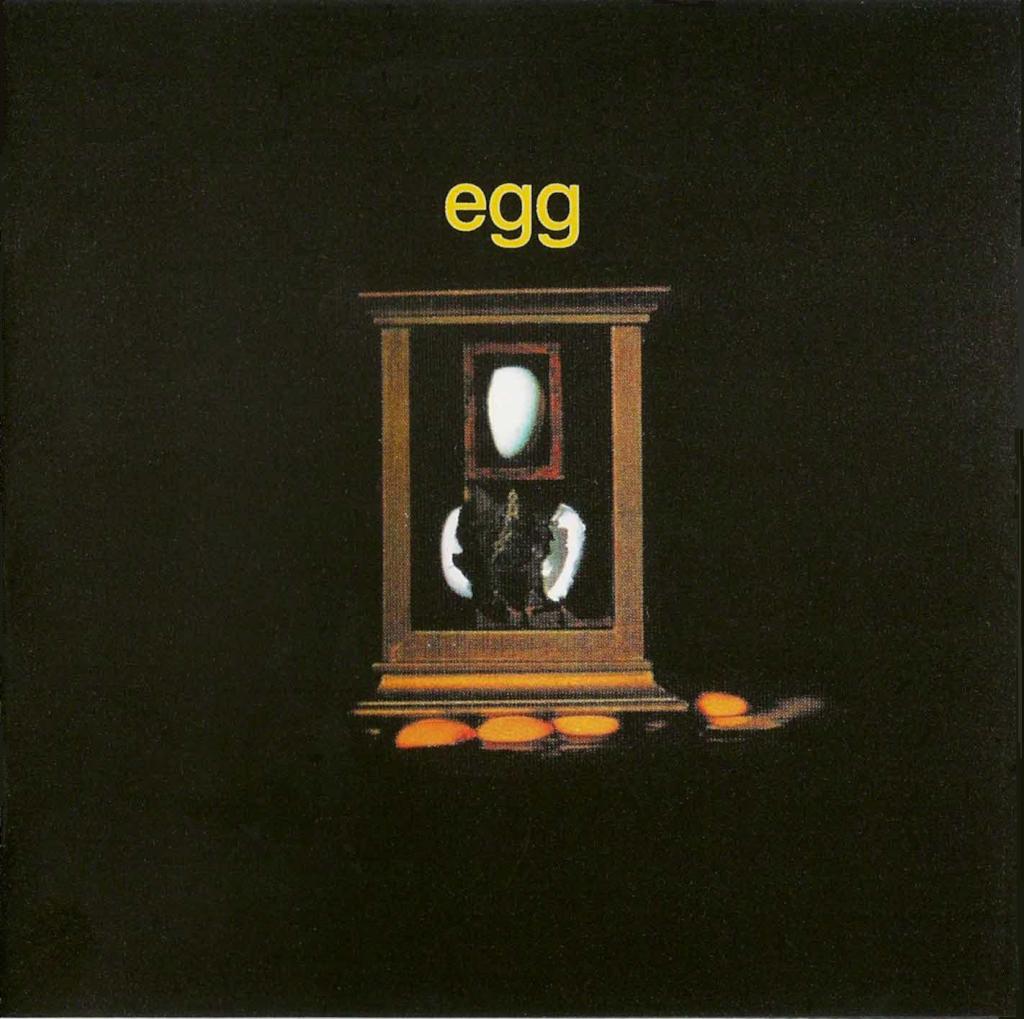
https://youtu.be/BFh2-Uzm2vQ — History and discography of Egg, a ’70s Progressive Jazz Rock Trio considered part of The Canterbury Scene. Though this band was from London and it wasn’t until later that they’d collaborate with the whimsical and psychedelic jazz rockers of Canterbury. The band began as Uriel with Steve Hillage (KHAN, GONG) on guitar but after he left, the band became Egg. The band included Dave Stewart (Dave Stewart & Barbara Gaskin, Hatfield and the North, Khan, National Health) on organ, Clive Brooks (The Groundhogs, Liar, 4X) on drums and Dirk Mont Campbell (Gilgamesh, National Health) on bass, vocals, and occasional French Horn.
Buy Egg / Arzachel CDs/Vinyl on Amazon https://amzn.to/3sojoKt
Today I’m telling the story of Egg, An early ’70s Prog Rock Trio that created 2 rock symphonies and are one of the earliest bands labeled as part of the subgenre referred to as the Canterbury Scene. But Egg came from London and it wasn’t until later that the members would collaborate with the whimsical and psychedelic jazz rockers of Canterbury, like Soft Machine and Caravan.
Hugo Martin Montgomery Campbell, better known as Dirk “Mont” Campbell, was born in Ismailia, Egypt on December 30th of 1950 and was named after his grandfather, Composer Martin Shaw. His British Military father was stationed in Kenya, where Mont was exposed to non-western music. When he was 10, his parents sent him to boarding school in England. He played some piano, guitar and French horn and played guitar in a band with his friends called The First and Last. It was in 1966 that he moved to London and in 1967 he made new friends at The City of London School.
Dave Stewart was born in the Waterloo section of London on the same day that Mont was born, December 30 1950. He started piano lessons when he was 9 or 10 but when he was 15 he got a guitar and joined a band called The Southsiders. One day, his friend Steve Hillage brought his guitar equipment to school and Dave thought he’d never be able to play at that level and would switch back to focusing on keys and organ.
Steve Hillage was born August 2nd of 1951 in Chingford in East London. He started learning piano at the age of 4 but became obsessed with the guitar and badgered his parents until they bought him one at the age of 9.
He and Dave were already friends but in 1967 Steve started jamming with Mont who would switch over to bass after realizing Steve was in another league on the guitar with his Clapton-like blues rock solos. They put out an ad in Melody Maker Magazine and Clive Brooks responded.
Born in Bow, East London on the 28th of December, 1949, Clive got his first drum kit when he was 15 and his first band was called Sounds Like Six. A very loud and expressive drummer, he won out over all of the others that auditioned, plus he had a van, which is a big bonus!
Already a powerful trio, Dave Stewart was persistent that the band would be even better if he contributed organ. The newly formed psychedelic blues rock group, Uriel performed covers of groups like Cream, The Nice, and Jimi Hendrix. Mont began writing songs, and the band liked to improvise long psychedelic pieces
They got a residency at Ryde Castle Hotel on the Isle of Wight for the summer of 1968 where they basically rehearsed in front of audiences at least 4 nights per week and slept out front in the van. One night Hillage disappeared off stage to fix a string, but left for such a long time that it forced Dave to learn to keep the audience entertained without guitar. After this, Steve Hillage left the band to study at Kent University where he would occasionally jam with members of Canterbury bands, Caravan and Spyrogyra.
Canterbury band Soft Machine didn’t have a guitarist in those days and I’m sure their growing success helped Mont, Dave, and Clive decide to continue as a trio using material mainly composed by Mont Campbell with contributions from Dave Stewart. Uriel would perform at the Middle Earth Club too and they soon signed with Middle Earth Club’s management branch under the condition that they change their name to The Egg rather than keeping the unmemorable name that sounded like “urinal.”
In 1969 they signed with a sub-label of Decca Records, Deram Nova Records, however, shortly after signing a contract under the name Egg, a new and short lived record label called Evolution was looking to produce a psychedelic album. Steve Hillage was on holiday from University and material was thrown together quickly at Mont’s house. The four piece band had just one day in June to record and mix an album that they released under the name “Arzachel” which was taken from the name of a crater on the moon.
Because they were under contract with another label, they are credited under fake names and this album went under the radar and was forgotten about, but has always been a highly sought after collectable for those who are in the know.
This quickly put together psychedelic album has a fair amount of variety. Steve Hillage and Mont Campbell share vocal duties and bounce back and forth between each other on the first two Organ driven songs. The end of the first song, like much of the album, has wailing guitar solos with a lot of great note bending. The second song darkens things up and takes it’s name from an H.P. Lovecraft demon. We hear an Organ driven instrumental and a blues rock number called “Leg” which is basically the blues classic “Rollin’ and Tumblin’” with different lyrics, a longer and more epic psychedelic blues rock song, and we top it off with an almost 17 minute piece of improvised psychedelic madness with too much reverb, but it’s certainly a blast.
Back down to a trio, August 29th, 1969 saw the first official release under the name Egg with their single, “Seven is a Jolly Good Time.” A silly, self-aware song that sings about learning to step away from 4/4 to take advantage of the possibilities of untapped rhythms. Catchy and humorous songs in odd time signatures are one of my favorite things found within the Canterbury Scene and though this band’s later catalog is largely instrumental, this is still a really fun introduction to the band.
Their first full length album was recorded at Lawnsdowne Studios in October of 1969 and released in March 13th, 1970. The first side of the album has shorter tracks, 3 of them being their unique prog rock sound with jazz and classical aspects and vocals by Mont Campbell. There are a couple of short psychedelic pieces and a rocking version of a piece by Bach. The B side contains an over 20 minute instrumental jazz rock symphony. Though Mont is the primary composer, they considered themselves joint composers and all of the songs are credited as being written by all three members.
The album did not initially include either of the songs from their first single, though they do appear as bonus tracks on some future versions. The 2004 re-issue also includes “Movement 3” of “Symphony No. 2” which had been omitted from the original album over worries of copyright issues because it sounded too much like pieces by Stravinsky and Holst, both of whom Mont Campbell was very inspired by. The very first pressings contained the full symphony and included a note admitting that they took from “Rite of Spring” while later copies had a note that mentioned how it needed to be removed.
The record label didn’t do enough to promote the album and it didn’t sell as well as hoped but it was well received. The band played shows alongside some other great groups, and they had gathered a loyal following of fans. In May, the group recorded their second album at Morgan Studios, but the band had been dropped by their management and the record label seemed hesitant to release it. A supporter of Egg working for Melody Maker Magazine wrote an article about the situation, putting a spotlight on the band. The album’s producer, Neil Slaven was also a big supporter of the band and his persistence helped lead the label to release the second Egg album, “The Polite Force,” in February of 1971.
I don’t think I’m alone when I say that this is my favorite album by the group. The album starts with a slow and heavy riff on the organ that actually reminds me of Doom metal or something along those lines, but we soon get a little more melodic and this epic 8-minute track tells some of the story of when they were performing on The Isle of Wight. We get a killer organ solo before returning to the slow and gritty riff for the end of the song. Track 2 is a really strange track, like most Egg tracks it is filled with changing odd time signatures but top it off with some sporadic sounding trumpet and saxophone countering the vocals and we get a rather unique piece, kind of akin to some strange Gentle Giant music. We then get to a track that takes its name from one of the short psychedelic pieces from the previous album, but this time we get over 9 minutes of psychedelic, sound collage. It’s reminiscent of “Revolution #9” by The Beatles and my cat isn’t able to sleep through it. The second side of the album has one complex instrumental song called “Long Piece No. 3” which is broken down into 4 parts. On top of his bass playing on the epic song, Mont also contributes some piano, organ and French Horn.
The album got good reviews and the band was able to play some shows with bigger groups like Yes and Gentle Giant. In the summer of 1971, the band was working on material for a new album though the record label wasn’t committing to putting it out. This time also saw Chris Cutler of Henry Cow forming a short-lived group with Dave Stewart. The Ottawa Music Company was an experimental rock orchestra that would perform compositions by everyone involved as well as some covers. They only played a few shows for fun and the group’s lineup seemed to grow for each performance. 22 musicians ended up contributing to it, including Steve Hillage, Dave’s future wife, Barabara Gaskin from Spyrogyra, and all members of both Henry Cow and Egg.
Meanwhile, Steve Hillage had written enough material for an album and recorded a demo with Dave Stewart. Steve’s friends in Caravan got him in contact with their manager who used the demo to get Steve signed with Deram Records. Steve had started a band called Khan but his keyboardist left the band right a month before recording so Dave Stewart joined Nick Greenwood and Eric Peachey for the November 1971 recording sessions for the album, “Space Shanty,” which is one of my absolute favorite Canterbury albums.
By early 1972, Egg had presented demos of new material on BBC radio shows but momentum had slowed down significantly and without a label backing them, they broke up after a final gig at the Roundhouse in London on July 9th, 1972. Mont was understandably a little tired of all of the hard work and little success and stepped aside to get into Spirituality and Philosophy, spent some time working as a plumber and went on to get a diploma from the Royal College of Music. Clive Brooks was invited to join London based band, The Groundhogs. And Dave Sinclair stepped down from Canterbury supergroup, Hatfield and the North to allow Dave Stewart to take his place.
After the first Hatfield and the North album, Dave Stewart, he was able to negotiate a farewell album by Egg, due to his new connection to Virgin Records. Egg returned to the studio in August of 1974 and December saw the release of “The Civil Surface” on Caroline Records, a subsidiary of Virgin.
The album contains the 3 8-9 minute songs that had previously been heard as demos and at their live shows. “Germ Patrol,” “Enneagram,” and “Wring Out the Ground (Loosely Now)” Surrounding these songs we have Wind Quartets and Preludes that I do enjoy in context of this full album, but it makes sense to me that the 3 epic songs are the ones more likely to appear in someone’s playlist.
Henry Cow members Lindsay Cooper and Tim Hodgkinson contribute woodwinds to tracks 1 and 6. Barbara Gaskin joins a choir of a few other female guest vocalists for the middle of “Prelude,” the 4th track. And Steve Hillage re-joins the group for the only song that Mont sings on, the 5th track, “Wing Out The Ground Loosely Now.” Mont Campbell plays French Horn when he joins 3 more guest stars for the two “Wind Quartet” tracks. “Germ Patrol” is really out there and reminds me a bit of Henry Cow thanks to the collaboration, there is also a super fuzzy bass solo. “Enneagram” kind of feels like a jazzier version of Emerson, Lake and Palmer and has a great keyboard solo. And “Wing Out The Ground (Loosely Now)” starts with a bang and later has Steve and Dave dueling each other basically so it is obviously a must listen.
More recently there have been some CDs released and that is a great way to support these guys and their families, and unfortunately we lost Clive Brooks in 2017. Rest in Peace and thank you for the music, good sir.
If you’re looking for where to get started listening to this band, I’d suggest starting with the song I just mentioned or their first single “Seven is a Jolly Good Time” for a small taste. I think “The Polite Force” is likely my favorite of the Egg albums but it’s only slightly better than the first album, if at all. I also like the Arzachel album and have been listening to it occasionally throughout the years though it’s not meant to sound anything like Egg.
I will tell the stories of future bands with these musicians in upcoming videos, so if you enjoyed this video, be sure to click the “like” button and subscribe to catch videos about Hatfield and the North, National Health, Steve Hillage, Caravan and many more bands. Leave a comment telling me what you think and letting me know what band you’d like me to make a video like this for and until next time, have a happy listening session!
 Sean's Music Hunt
Leave a comment